Pages

Showing posts with label fail. Show all posts

Tuesday, October 15, 2013

Apple Cider-Caramel Cake, Gluten-Free


Walking all over the internet for pumpkin recipes, I came across this one. It didn't have any reviews but how could apple cider and caramel be wrong?

It is supposed to be a light recipe but I fattened it up, substituting butter for margarine, regular buttermilk and cream cheese instead of low-fat. The idea of using breadcrumbs to prepare the pan was a little disturbing to me, and since I was making this gluten-free anyway, used gluten-free flour.

Apple Cider-Caramel Cake
from My Recipes

2 1/4 c apple cider, divided
2 1/4 c granulated sugar, divided
1 tbsp butter
3 c sliced peeled cooking apple (such as Braeburn, Rome, or McIntosh)
1/2 c butter, softened
1 tbsp grated lemon rind
1 (8-oz) pkg. cream cheese
3 large eggs
6 tbsp fresh lemon juice, divided
3 c gluten-free all-purpose flour
1/2 tsp baking soda
1/4 tsp salt
1 c buttermilk
1 tsp vanilla extract
1 tbsp powdered sugar

Bring 2 cups cider to a boil in a large, heavy saucepan over high heat. Cook until reduced to 1/2 cup (about 20 minutes).

Full saucepan at the on-set, after 7 minutes, and then after 24 minutes. I considered measuring the final volume but I didn't.

Reduce heat to medium-high; stir in 1/2 cup granulated sugar.


Cook 5 minutes or until sugar dissolves and cider is thick and dark-colored, stirring occasionally.

This is the change after four minutes. And then I let it cook another couple of minutes because I wasn't sure if I really saw a color change after staring at it constantly.

Remove from heat; cool 1 minute. Stir in 1 tablespoon butter.


Stir in apple; cook 15 minutes over medium-high heat or until the liquid is absorbed, stirring frequently. Remove from heat; cool. (If apple mixture hardens, place it over low heat until softened).


Preheat oven to 325°. Coat a 12-cup Bundt pan with butter; dust with flour.

Combine 1 1/2 cups granulated sugar, 1/2 cup butter, lemon rind, and cream cheese in a large bowl; beat at medium speed of a mixer until well-blended (about 5 minutes).


I chose to do this in two steps: first combine the butter and cream cheese, then the sugar and zest.

Add eggs, 1 at a time, beating well after each addition.


Beat in 2 tablespoons lemon juice.


Combine flour, baking soda, and salt.


Add flour mixture to sugar mixture alternately with buttermilk, beginning and ending with flour mixture.


Fold in apple mixture.


Pour into prepared pan; bake at 325° for 60-90 hours or until a wooden pick inserted in center comes out clean.

Who knows if smoothing the batter makes a difference to a bundt, but I did it before baking the cake for 60 minutes.

Combine 1/4 cup cider, 1/4 cup granulated sugar, 1/4 cup lemon juice, and vanilla; let stand until sugar dissolves, stirring occasionally.


Cool cake in pan 5 minutes, and pierce with a wooden skewer in several places. Pour cider mixture over cake in pan, and let stand 10 minutes.


Remove from pan, and cool completely on a wire rack.


Sift powdered sugar over top of cake.

I waited until the morning to sprinkle on the sugar. I didn't want this specimen-like thing to happen again.


I took this to work and the consensus was, "uh, nice try but don't do that again." The cake part was good, but the apples were bitter. The sugar was much too cooked, aka, burnt. I might've reduced the apple cider too much but I definitely went way too long and too hot after adding the sugar. Staring at the caramel sauce as it cooked was probably not the brightest thing I've ever done since the color change was indistinguishable over those few minutes. And the cook time after adding the apples was just way too long. If I do this again, I will heed these words.

Cost:
  • apple cider: $0.70
  • granulated sugar: $0.53
  • butter: $0.45
  • apples: $0.73
  • lemons: $1.28
  • cream cheese: $1.49
  • eggs: $0.95
  • gluten-free all-purpose flour: $2.90
  • buttermilk: $0.26
  • vanilla extract: $0.08
  • powdered sugar: $0.02
Total: $9.39 or about $0.52 for each of 18 servings. Normally I'd laugh my head off - 18 servings in a bundt? In this case since the apples were gross 18 was probably on the low end.

Monday, February 25, 2013

Spiced Pumpkin Swirl Cheesecake, Take 4


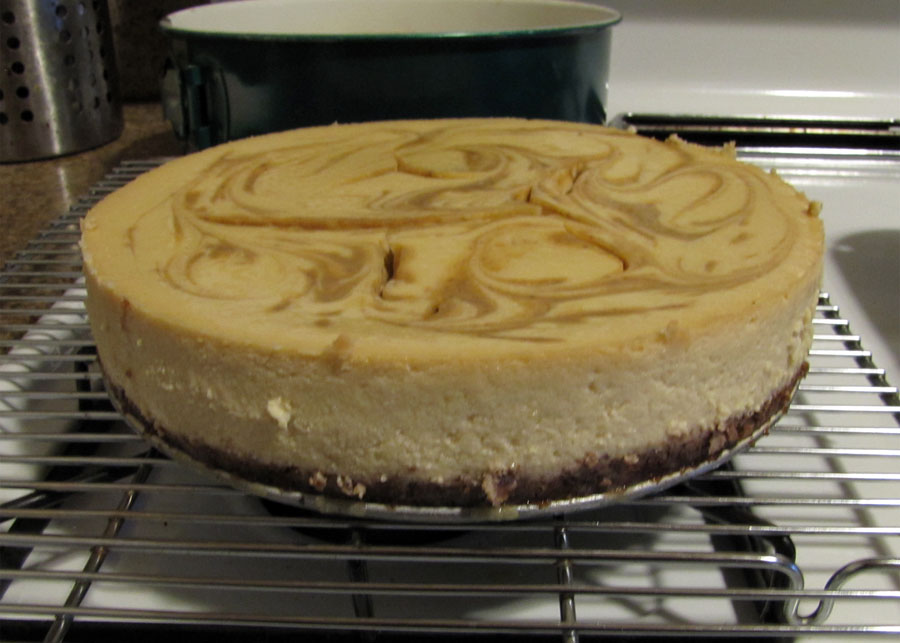
I was going to ramble on about this latest take on cheesecake. But shit, this is boring me and I made the damn thing! In a nutshell I didn't fix the problems found in the previous trials. However, I did find that draining the pumpkin worked very well to yield a nice pumpkin swirl with minimal cracking.

Spiced Pumpkin Swirl Cheesecake, Take 4
recipe from Cooking Club of America
Take 3
Take 2 and the follow-up
First try

Baked the crust and found it greasy so used three paper towels to "degrease" it by patting.


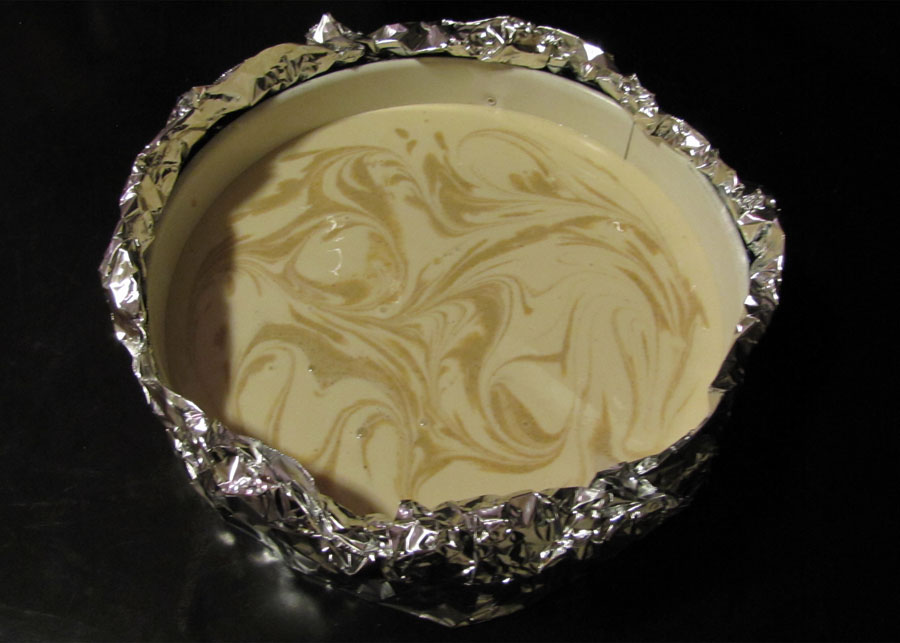
The batter was prepared, the layers poured and swirled before baking.


After baking, the foil was removed and lots of water was observed.


Even after sitting on a towel for 12 hours, more water leaked out.


I cut a slice and ate it anyway.


And a day later, after sitting uncovered in the fridge there's lots of moisture/grease in the crust. Blech.


Monday, December 3, 2012

Spiced Pumpkin Swirl Cheesecake, Take 3


The last cheesecake, Take 2, looked like it was perfect. Right up to where I removed the foil and found water.

Since the crust in that last cheesecake looked very promising, I'm going to reduce the amount of time the nuts are in the blender expecting that will minimize the baking time required for the crust to become dry and set, possibly down to the originally recommended baking time.

I'm not going to do anything to investigate the last cheesecake cracking. It might be because I was tilting the entire hot cheesecake or it could legitimately be the difference in water content of the pumpkin vs plain batter portions, or something else entirely. I'll save that for another day.

Spiced Pumpkin Swirl Cheesecake, Take 3
adapted from Cooking Club of America

CRUST
2 c pecans, toasted and coarsely chopped
2 tbsp packed brown sugar
3 tbsp unsalted butter, melted

FILLING
24-oz cream cheese, softened
1 c packed brown sugar, divided
3/4 c sour cream
2 tsp vanilla extract
3 eggs
1 c pumpkin puree
1 tsp ground cinnamon
1/2 tsp ground ginger
1/4 tsp ground cloves
1/4 tsp ground nutmeg

Heat oven to 325°F.

Pulse pecans in blender just until finely ground. Transfer to a medium bowl. Add brown sugar and melted butter; stir just until combined.


Press into bottom of pan. Bake 10 to 15 minutes or until set and dry. Cool on wire rack.

Say what?! It worked! Crust is set and dry in 15 minutes!

Beat cream cheese and 3/4 cup of the brown sugar in large bowl at medium speed just until blended.


Beat in sour cream and vanilla.


Add eggs one at a time, beating at low speed just until combined, scraping down the bowl between eggs.


Whisk pumpkin, remaining 1/4 cup brown sugar, cinnamon, ginger, cloves and nutmeg in medium bowl.


Whisk in 1 1/2 cups of the cheesecake mixture.


Wrap outside of 9-inch springform pan with two layers of foil.


Spoon half of the remaining plain cheesecake mixture into crust. Top with half of the pumpkin filling. Repeat (do not spread evenly for best swirls).


With knife or metal spatula, gently swirl through batter to achieve a marbled effect.


Place springform pan in large shallow roasting or broiler pan; add enough hot tap water to come halfway up sides of springform pan.

Ok, so the water doesn't reach halfway up the springform pan sides. Remembering back to the first try of this recipe, I used the Corningware dish which is taller and more narrow meaning the same volume of water reaches higher up on the springform sides. That cheesecake didn't crack at all though it didn't have swirls. My cracking question still isn't answered.

Bake 60 to 70 minutes or until edges are puffed and top is dry to the touch. Center should move slightly when pan is tapped but should not ripple as if liquid.


Remove springform pan from roasting pan; remove foil. Cool on wire rack to room temperature.

Look, tiny cracks in the cake. And ugh! The foil is loaded with oil! Or butter! Or oily butter! Ugh!

Refrigerate, uncovered, overnight. Store in refrigerator.
This is where I deviated from the recipe. After midnight when the cheesecake came out of the oven, tired and disgruntled by the oily foil, I left the cake to cool on the wire rack while I fooled around with Take 2 momentarily before napping. That nap turned into full-on zzz's. I figured I'd bring the cheesecake to work to chill a good portion of the day and then get it out to serve later-day.

In the morning I removed the springform pan sides and transferred the oily-bottomed pan and cake from the wire rack to a plate which was covered with plastic wrap. My fingers were so slick from handling the cheesecake I looked closely at the wire rack. It was dripping with oil. I went ahead and brought it to work anyway.

The cheesecake had cracked like crazy and oozed oil overnight.

Cost:
Total: $8.97, or about $0.75 for each of 12 servings.


The cheesecake was in the fridge about 2 hours before it was brought out and dug into. The crust actually turned out pretty good. It didn't taste burned and it held up quite nicely. The oil was crazy though. After a few people took slices, the pan looked really unappetizingly greasy, downright disgusting really. And you can't walk around telling everyone it's just pecan oil and/or butter. At the end of the day 1/4 of the cheesecake went into the trash, which was a major bummer.

It's very likely the cheesecake would have been much more appetizing if it had chilled properly in the refrigerator at least 8 hours, but the oil thing is still annoying. If the oil doesn't come out of the nuts when grinding them, clearly it will come out when baking. It makes me wonder if the crust on Take 2 would've been just as oily if water hadn't been allowed in. Wait, that doesn't make sense either. I'm baffled.

Maybe the key is to reduce the butter. Or this is the justification for buying a food processor. Could it have magical nut-grinding powers?